Where the following linked documents are in the original German language, an English translation follows.
In 2011, Switzerland passed a statute authorizing the Swiss Attorney General the authority to prosecute war crimes committed abroad. Under Swiss law, all criminal complaints are required to be investigated, and should it be the opinion of the investigator that there are no crimes being committed he is required to draft a report that explains why. This report is subject to review, however, by the Swiss Federal Criminal Court if the report is contested. The review is initiated when a formal Objection is filed with the Court within 10 days in accordance with Article 396(1) of the Swiss Criminal Procedure Code (SCPC). If the Court upholds the Objection, “it may issue instructions to the public prosecutor…on the continuation of the proceedings (Art. 397(3), SCPC).”
This criminal investigation process is very different from criminal investigations that occur within the United States, where the prosecutor has full and complete discretion to investigate a crime or not to investigate, and the decision not to investigate is not subject to review by a higher authority.
In a 2012 decision, the Swiss Federal Criminal Court rejected immunity claims made by a former Algerian Defense Minister Khaled Nezzar that he was immune from prosecution because the alleged war crimes occurred during his time in government office. The Court stated immunity is not available for international crimes such as war crimes, crimes against humanity, torture or genocide.
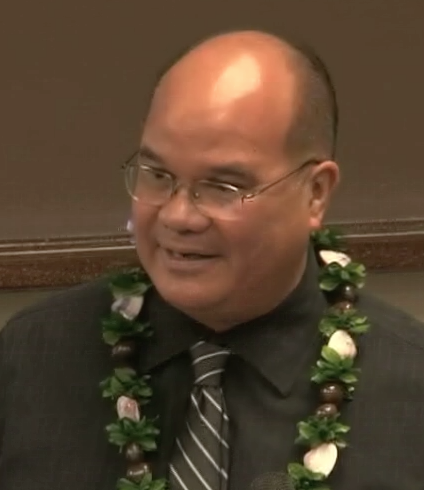 In December 2014, Dr. Keanu Sai, who represented two victims of war crimes from Hawai‘i through limited powers of attorney, filed a war crime complaint with the Swiss Attorney General (AG) in Bern, Switzerland. Dr. Sai filed additional complaints in January 2015. This initiated an investigation by Prosecutor Andreas Müller from the Swiss AG’s War Crimes Unit that eventually came before the Swiss Federal Criminal Court Objections Chamber in April 2015. The Court decreed that it could not accept Dr. Sai’s Objection due to a procedural technicality.
The Hawaiian Kingdom blog has redacted the name of one of the complainants for security and safety concerns.
After the Court’s decision, Dr. Sai was given information from a reliable source in Switzerland that a former Prosecutor of the Attorney General’s War Crime Unit (Center of Competence for International Crimes) admitted that after receiving the war crime complaints, the War Crime Unit could not refute the evidence of war crimes, and stated, anecdotally, it was as if a bomb went off in the office. He also admitted that the Swiss AG Office deliberately used a procedural technicality to prevent the Court from reviewing the investigation.
In his Report dated February 3, 2015, Prosecutor Müller took the position that war crimes are not being committed because Hawai‘i was annexed in 1898 by a Congressional joint resolution and in 1959 Congress created the State of Hawai‘i as the 50th State. Because of this, according to the Prosecutor, Hawai‘i is not occupied and therefore war crimes have not been committed. The problem with this reasoning, which the Prosecutor knows is wrong, is that he is relying on United States (US) laws enacted by the US Congress, which has no force and effect beyond US borders. According to this logic, Congress could pass a law today annexing Switzerland and then pass another law calling Switzerland its 50th State of the American Federal Union.
US laws are domestic or national laws that apply over the territory of a particular Nation or State. It has no effect beyond the borders of the country whose legislature enacted it. International laws, however, which are laws between nations, can annex foreign territory, which is a treaty or an agreement between the two States. There is no treaty between the Hawaiian Kingdom and the United States. Instead, Hawai‘i was occupied during the Spanish-American War on August 12, 1898, and that occupation has since continued under a cloak of deception and lies.
Responding to Prosecutor Müller’s error of relying on US laws and not international laws, Dr. Sai sent an Objection dated March 31 to the Federal Criminal Court, via FedEx, on April 1, 2015, which was one day prior to the expiration of the ten-day period. The Objection reached the Court in Bellinzona on April 8, 2015. The following day, the Court issued an Order to the Prosecutor to turn over all evidence of his investigation for consideration by the Court.
In just twenty days, the Court issued their Decision on April 28, 2015. After the Court named the former CEO of Deutsche Bank Josef Ackermann, State of Hawai‘i Governor Neal Abercrombie, Lt. Governor Shan Tsutsui, Director of Taxation Frederik Pablo, and Deputy Director Joshua Wisch as alleged war criminals of pillaging, and stating that the 1864 Hawaiian-Swiss Treaty was not cancelled, the Court concluded it was unable to accept the Objection because it was not filed timely within the required 10-day period.
In its judgment, the Court cited a 2012 Federal Criminal Court decision that concluded if a party uses FedEx, being a private courier, and not the Swiss Postal Service or diplomatic representative, the Court can only accept the filings on the day received and not sent. This was the procedural technicality that the former prosecutor spoke of, which is what they used in an attempt to slow down the process. Having been made aware of the actions taken by the Swiss AG’s office, Dr. Sai was preparing to re-file the complaints.
“At the center of these proceedings,” said Dr. Sai, “is whether a domestic law of the United States could have annexed another independent State, being the Hawaiian Kingdom. From a law standpoint it is clear that it cannot because domestic laws are limited to the territory of that particular country.” Dr. Sai also stated, “since the Permanent Court of Arbitration recognized the continued existence of the Hawaiian Kingdom as a “State” during arbitration proceedings from 1999-2001, the Swiss Prosecutor cannot claim otherwise unless he has evidence under international law that the Permanent Court of Arbitration didn’t have that Hawai‘i was annexed by a treaty. If there is a treaty then there are no war crimes, but if there is no treaty then you have war crimes. It’s that simple. ”
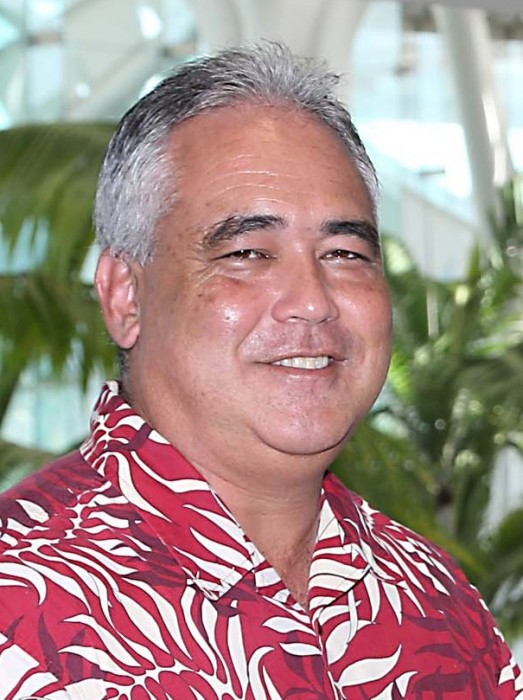 Before the re-filing, Dr. Sai met with Governor David Ige’s Chief of Staff Mike McCartney on three occasions in June of 2015. In these meetings that lasted over two hours each, Dr. Sai conveyed to McCartney that his clients were willing to forgo re-filing the complaint with the Swiss AG’s office if the Governor’s office would take corrective measures to address this matter. Dr. Sai also explained the remedy to the situation, which stems from his doctoral research in political science. On July 2, 2015, Dr. Sai provided McCartney a Report that covered what was discussed in the three meetings and a proposed remedy in line with international law and relevant rules of the State of Hawai‘i. After numerous failed attempts to reach McCartney, it left Dr. Sai with no alternative but to re-file the complaint, which would include Lt. Governor Shan Tsutsui who is a carry over from the previous administration under Governor Abercrombie.
On August 18, 2015, the War Crimes Report and Complaint was re-filed. The investigation commenced in August and lasted for nearly six months. Prosecutor Müller issued a Report on January 28, 2016, again relying on the 1898 joint resolution of annexation and the 1959 Statehood Act.
Dr. Sai received Prosecutor Müller’s Report on February 13, 2016, which made the ten-day window expire on February 23. Dr. Sai sent his Objection to the Federal Criminal Court Objections Chamber on February 20, through the Swiss Postal Service in Geneva, and the Court received it on February 22. According to Article 91(2), SCPC, filings “must be delivered on the day of expiry of the time limit at the latest…handed for delivery to SwissPost, a Swiss diplomatic or consular representations.” In other words, delivery by the Swiss Postal Service or to a diplomatic or consular post is recognized by its post date and not by its date received.
On that same day the Court received Dr. Sai’s Objection, it issued an Order to Prosecutor Müller to furnish the Court right away all records of his investigation. Dr. Sai was copied on the Order.
The following month, Dr. Sai received a Letter from the Court dated March 2, 2016, whereby the Court notified him that the case has been accepted for review and that he will need to provide a security for court costs in the amount of 2,000 Swiss Francs to be deposited in the Court’s bank account by March 14, 2016. Additionally, Dr. Sai was also directed by the Court to resubmit the Objection with his original signature. Dr. Sai’s original Objection pleading that was sent on February 20 had a scanned signature and not his original.
On March 9, 2016, while Dr. Sai was visiting with a friend in San Francisco, he went to the Swiss Consulate to have his letter and package sent to the Court through diplomatic courier. The Consulate acknowledged its receipt of the package on the same day. Swiss law recognizes the “post-date” if sent through the Swiss Consulate, which means the package would be recognized by the Court as being filed on March 9, which is before the March 14 deadline.
Here follows the list of individuals who have been under a criminal investigation for war crimes since August 2015, and which is now under review by the Swiss Federal Criminal Court in Bellinzona, Switzerland.
- Greg K. Nakamura—Judge, Circuit Court of the Third Circuit, State of Hawai‘i, whose address is Hale Kaulike, 777 Kilauea Avenue, Hilo, HI 96720-4212, Alleged War crime—Principal perpetrator of denial of a fair and regular trial;
- Josef Ackermann, former Chief Executive Officer, Deutsch Bank Management Board, parent company of Deutsche Bank National Trust Company and Deutsche Bank Trust Company Americas, whose address is Gottfried Keller-Strasse 7, 8001 Zurich, Switzerland, Alleged War Crimes—Principal perpetrator of pillaging and accomplice to denial of a fair and regular trial and unlawful arrest and detention;
- Jürgen Fitschen, Co-Chief Executive Officer, Deutsche Bank Management Board, parent company of Deutsche Bank National Trust Company and Deutsche Bank Trust Company Americas, whose address is Taunusanlage 12, 60325 Frankfurt, Germany, Alleged War Crimes—Principal perpetrator of pillaging and accomplice to denial of a fair and regular trial and unlawful arrest and detention;
- Anshu Jain, Co-Chief Executive Officer, Deutsche Bank Management Board, parent company of Deutsche Bank National Trust Company and Deutsche Bank Trust Company Americas, whose address is Taunusanlage 12, 60325 Frankfurt, Germany, Alleged War Crimes—Principal perpetrator of pillaging and accomplice to denial of a fair and regular trial and unlawful arrest and detention;
- Stefan Krause, Chief Financial Officer, Deutsche Bank Management Board, parent company of Deutsche Bank National Trust Company and Deutsche Bank Trust Company Americas, whose address is Taunusanlage 12, 60325 Frankfurt, Germany, Alleged War Crimes—Principal perpetrator of pillaging and accomplice to denial of a fair and regular trial and unlawful arrest and detention;
- Stephan Leithner, Chief Executive Officer Europe (except Germany and UK), Human Resources, Legal & Compliance, Government and Regulatory Affairs, Deutsche Bank Management Board, parent company of Deutsche Bank National Trust Company and Deutsche Bank Trust Company Americas, whose address is Taunusanlage 12, 60325 Frankfurt, Germany, Alleged War Crimes—Principal perpetrator of pillaging and accomplice to denial of a fair and regular trial and unlawful arrest and detention;
- Stuart Lewis, Chief Risk Officer, Deutsche Bank Management Board, parent company of Deutsche Bank National Trust Company and Deutsche Bank Trust Company Americas, whose address is Taunusanlage 12, 60325 Frankfurt, Germany, Alleged War Crimes—Principal perpetrator of pillaging and accomplice to denial of a fair and regular trial and unlawful arrest and detention;
- Rainer Neske, Head of Private and Business Clients, Deutsche Bank Management Board, parent company of Deutsche Bank National Trust Company and Deutsche Bank Trust Company Americas, whose address is Taunusanlage 12, 60325 Frankfurt, Germany, Alleged War Crimes—Principal perpetrator of pillaging and accomplice to denial of a fair and regular trial and unlawful arrest and detention;
- Henry Ritchotte, Chief Operating Officer, Deutsche Bank Management Board, parent company of Deutsche Bank National Trust Company and Deutsche Bank Trust Company Americas, whose address is Taunusanlage 12, 60325 Frankfurt, Germany, Alleged War Crimes—Principal perpetrator of pillaging and accomplice to denial of a fair and regular trial and unlawful arrest and detention;
- Charles R. Prather, attorney for Deutsche Bank National Trust Company and Deutsche Bank Trust Company Americas, belonging to the law firm RCO Hawaii, LLLC, whose address is 900 Fort Street Mall, Suite 800, Honolulu, HI 96813, Alleged War Crimes—Principal perpetrator of pillaging and accomplice to denial of a fair and regular trial and unlawful arrest and detention;
- Sofia M. Hirosone, attorney for Deutsche Bank National Trust Company and Deutsche Bank Trust Company Americas, belonging to the law firm RCO Hawaii, LLLC, whose address is 900 Fort Street Mall, Suite 800, Honolulu, HI 96813, Alleged War Crimes—Principal perpetrator of pillaging and accomplice to denial of a fair and regular trial and unlawful arrest and detention;
- Michael G.K. Wong, attorney for Deutsche Bank National Trust Company and Deutsche Bank Trust Company Americas, belonging to the law firm RCO Hawaii, LLLC, whose address is 900 Fort Street Mall, Suite 800, Honolulu, HI 96813, Alleged War Crimes—Principal perpetrator of pillaging and accomplice to denial of a fair and regular trial and unlawful arrest and detention; and
- Glenn Swanson, realtor belonging to the real estate firm Savio Realty, whose address is 15-2911 Pahoa Village Rd, Pahoa, HI 96778, Alleged War Crimes—Principal perpetrator of pillaging and accomplice unlawful arrest and detention; and
- Sandra Hegerfeldt, realtor belonging to the real estate firm Savio Realty, whose address is 15-2911 Pahoa Village Rd, Pahoa, HI 96778, Alleged War Crimes—Accomplice to pillaging and unlawful arrest and detention; and
- Jessica Hall, realtor belonging to the real estate firm Savio Realty, whose address is 15-2911 Pahoa Village Rd, Pahoa, HI 96778, Alleged War Crimes—Accomplice to pillaging and unlawful arrest and detention; and
- Dana Kenny, realtor belonging to the real estate firm Savio Realty, whose address is 15-2911 Pahoa Village Rd, Pahoa, HI 96778, Alleged War Crimes—Accomplice to pillaging and unlawful arrest and detention; and
- Shawn H. Tsuha, at the time of the pillaging, unfair trial and unlawful arrest, Sheriff, State of Hawai‘i Department of Public Safety Sheriff’s Department, whose address is 919 Ala Moana Boulevard, 4th Floor, Honolulu, HI 96814, Alleged War Crimes—Principal perpetrator of pillaging and accomplice to denial of a fair and regular trial and unlawful arrest and detention; and
- Patrick Kawai, Lieutenant, State of Hawai‘i Department of Public Safety Sheriff’s Department, whose address is Hale Kaulike, 777 Kilauea Avenue, Hilo, HI 96720-4212, Alleged War Crimes—Principal perpetrator of pillaging and accomplice to denial of a fair and regular trial and unlawful arrest and detention.
- Samuel Jelsma, Captain, County of Hawai‘i Police Department, State of Hawai‘i, whose address is 15-2615 Kea‘au-Pahoa Road, Hilo, HI 96778, Alleged War Crimes—Principal perpetrator of unlawful arrest and detention;
- Reed Mahuna, Lieutenant, County of Hawai‘i Police Department, State of Hawai‘i, whose address is 15-2615 Kea‘au-Pahoa Road, Hilo, HI 96778, Alleged War Crimes—Principal perpetrator of unlawful arrest and detention;
- Brian Hunt, Patrolman, County of Hawai‘i Police Department, State of Hawai‘i, whose address is 15-2615 Kea‘au-Pahoa Road, Hilo, HI 96778, Alleged War Crimes—Principal perpetrator of unlawful arrest and detention;
- Glenn Hara, Judge, Circuit Court of the Third Circuit, State of Hawai‘i, whose address is Hale Kaulike, 777 Kilauea Avenue, Hilo, HI 96720-4212, Alleged War Crimes—Principal perpetrator of denial of a fair and regular trial; and
- Mitch Roth, Prosecuting Attorney, County of Hawai‘i, whose address is Aupuni Center, 655 Kilauea Avenue, Hilo, HI 96820, Alleged War Crimes—Principal perpetrator of unlawful arrest and accomplice to denial of a fair and regular trial.
- Barack Obama, President of the United States, whose address is 1600 Pennsylvania Avenue NW, Washington, DC 20500, Alleged War Crime—Principal perpetrator of unlawful appropriation of property;
- Jack Lew, Secretary, United States Treasury, since February 28, 2013, whose address 1500 Pennsylvania Avenue, NW, Washington, D.C. 20220, Alleged War Crime—Principal perpetrator of unlawful appropriation of property;
- Neal Wolin, former Secretary, United States Treasury, from January 25, 2013 to February 28, 2013, whose address 1500 Pennsylvania Avenue, NW, Washington, D.C. 20220, Alleged War Crime—Principal perpetrator of unlawful appropriation of property;
- Timothy F. Geithner, former Secretary, United States Treasury, from January 26, 2009 to January 25, 2013, whose address 1500 Pennsylvania Avenue, NW, Washington, D.C. 20220, Alleged War Crime—Principal perpetrator of unlawful appropriation of property;
- Stuart A. Levey, former Secretary, United States Treasury, from January 20, 2009 to January 26, 2009, whose address 1500 Pennsylvania Avenue, NW, Washington, D.C. 20220, Alleged War Crime—Principal perpetrator of unlawful appropriation of property;
- Henry M. Paulson, former Secretary, United States Treasury, from July 10, 2006 to January 20, 2009, whose address 1500 Pennsylvania Avenue, NW, Washington, D.C. 20220, Alleged War Crime—Principal perpetrator of unlawful appropriation of property;
- Robert M. Kimmit, former Secretary, United States Treasury, from June 30, 2006 to July 10, 2006, whose address 1500 Pennsylvania Avenue, NW, Washington, D.C. 20220, Alleged War Crime—Principal perpetrator of unlawful appropriation of property;
- John W. Snow, former Secretary, United States Treasury, from February 3, 2003 to June 30, 2006, whose address 1500 Pennsylvania Avenue, NW, Washington, D.C. 20220, Alleged War Crime—Principal perpetrator of unlawful appropriation of property;
- Neal Abercrombie, former Governor, State of Hawai‘i, from December 6, 2010 to December 1, 2014, whose address is State of Hawai‘i Executive Chambers, State Capital, Honolulu, HI 96813, Alleged War Crime—Principal perpetrator of pillaging;
- Linda Lingle, former Governor, State of Hawai‘i, from December 2, 2002 to December 6, 2010, whose address is State of Hawai‘i Executive Chambers, State Capital, Honolulu, HI 96813, Alleged War Crime—Principal perpetrator of pillaging;
- Ben Cayetano, former Governor, State of Hawai‘i, from December 2, 1994 to December 2, 2002, whose address is State of Hawai‘i Executive Chambers, State Capital, Honolulu, HI 96813, Alleged War Crime—Principal perpetrator of pillaging;
- Shan Tsutsui, Lieutenant Governor, State of Hawai‘i, since December 27, 2012, whose address is State of Hawai‘i Executive Chambers, State Capital, Honolulu, HI 96813, Alleged War Crime—Principal perpetrator of pillaging;
- Brian Schatz, former Lieutenant Governor, State of Hawai‘i, from December 6, 2010 to December 26, 2012, whose address is State of Hawai‘i Executive Chambers, State Capital, Honolulu, HI 96813, Alleged War Crime—Principal perpetrator of pillaging;
- Duke Aiona, former Lieutenant Governor, State of Hawai‘i, from December 4, 2002 to December 6, 2010, whose address is State of Hawai‘i Executive Chambers, State Capital, Honolulu, HI 96813, Alleged War Crime—Principal perpetrator of pillaging;
- Mazie Hirono, former Lieutenant Governor, State of Hawai‘i, from December 2, 1994 to December 2, 2002, whose address is State of Hawai‘i Executive Chambers, State Capital, Honolulu, HI 96813, Alleged War Crime—Principal perpetrator of pillaging;
- Frederik Pablo, former Director of Taxation, State of Hawai‘i, from 2010 to 2014, whose address is State of Hawai‘i Executive Chambers, State Capital, Honolulu, HI 96813, Alleged War Crime—Principal perpetrator of pillaging;
- Stanley Shiraki, former Director of Taxation, State of Hawai‘i, from 2009 to 2010, whose address is State of Hawai‘i Executive Chambers, State Capital, Honolulu, HI 96813, Alleged War Crime—Principal perpetrator of pillaging;
- Kurt Kawafuchi, former Director of Taxation, State of Hawai‘i, from 2006 to 2009, whose address is State of Hawai‘i Executive Chambers, State Capital, Honolulu, HI 96813, Alleged War Crime—Principal perpetrator of pillaging;
- Joshua Wisch, former Deputy Director of Taxation, State of Hawai‘i, from 2012 to 2013, and currently serving as Spokesman for the Attorney General’s Office of the State of Hawai‘i, whose address is State of Hawai‘i Executive Chambers, State Capital, Honolulu, HI 96813, Alleged War Crime—Principal perpetrator of pillaging;
- Randolf L.M. Baldemor, former Deputy Director of Taxation, State of Hawai‘i, from 2010 to 2012, whose address is State of Hawai‘i Executive Chambers, State Capital, Honolulu, HI 96813, Alleged War Crime—Principal perpetrator of pillaging;
- Ronald B. Randall, former Deputy Director of Taxation, State of Hawai‘i, from 2009 to 2010, whose address is State of Hawai‘i Executive Chambers, State Capital, Honolulu, HI 96813, Alleged War Crime—Principal perpetrator of pillaging;
- Sandra Yahiro, former Deputy Director of Taxation, State of Hawai‘i, from 2006 to 2009, whose address is State of Hawai‘i Executive Chambers, State Capital, Honolulu, HI 96813, Alleged War Crime—Principal perpetrator of pillaging;
- Bernard Carvalho, Mayor for Kaua‘i County, State of Hawai‘i, since December 1, 2008, whose address is 4444 Rice St., Suite 235, Lihue, HI 96766, Alleged War Crime—Principal perpetrator of pillaging;
- Kaipo Asing, former Mayor for Kaua‘i County, State of Hawai‘i, from July 17, 2008 to December 1, 2008, whose address is 4444 Rice St., Suite 235, Lihue, HI 96766, Alleged War Crime—Principal perpetrator of pillaging; and
- Bryan Baptiste, former Mayor for Kaua‘i County, State of Hawai‘i, from 2002 to July 17, 2008, who is deceased, Alleged War Crime—Principal perpetrator of pillaging.
These individuals are named as alleged war criminals for pillaging, unlawful appropriation of property, unfair trial and unlawful confinement, which are all war crimes under the Fourth Geneva Convention (1949) and international humanitarian law.
To understand the background of the alleged war crimes committed against Kale Kepekaio Gumapac by Deutsche Bank and State of Hawai‘i officials, Big Island Video News uploaded a 5-part news series in 2013.
 Senator Augustus Bacon, stated, “The proposition which I propose to discuss is that a measure which provides for the annexation of foreign territory is necessarily, essentially, the subject matter of a treaty, and that the assumption of the House of Representatives in the passage of the bill and the proposition on the part of the Foreign Relations Committee that the Senate shall pass the bill, is utterly without warrant in the Constitution [31 Cong. Rec. 6145 (June 20, 1898)].”
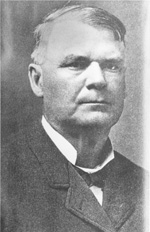 Senator William Allen stated, “A Joint Resolution if passed becomes a statute law. It has no other or greater force. It is the same as if it would be if it were entitled ‘an act’ instead of ‘A Joint Resolution.’ That is its legal classification. It is therefore impossible for the Government of the United States to reach across its boundary into the dominion of another government and annex that government or persons or property therein. But the United States may do so under the treaty making power [31 Cong. Rec. 6636 (July 4, 1898)].”
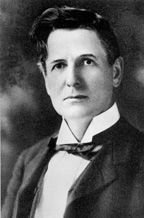 Senator Thomas Turley stated, “The Joint Resolution itself, it is admitted, amounts to nothing so far as carrying any effective force is concerned. It does not bring that country within our boundaries. It does not consummate itself [31 Cong. Rec. 6339 (June 25, 1898)].”
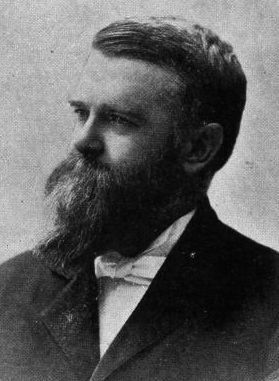 speak to me of a ‘treaty’ when we are confronted with a mere proposition negotiated between the plenipotentiaries of two
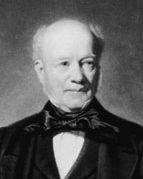
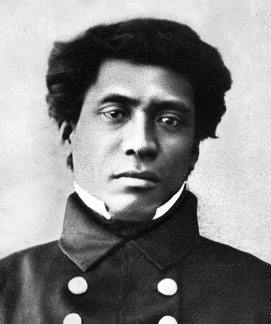
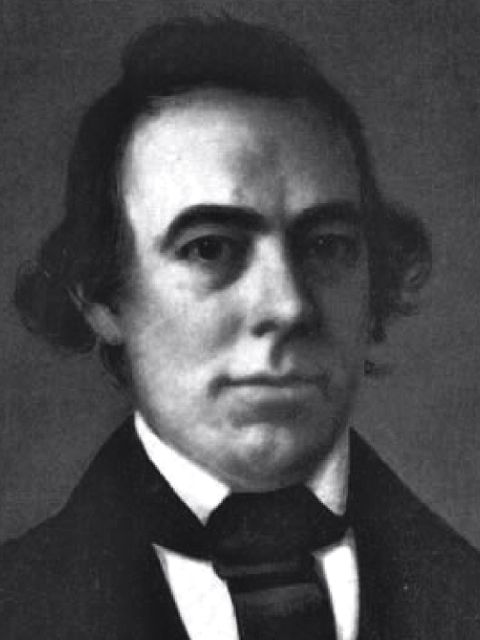
 The Hawaiian government selected Professor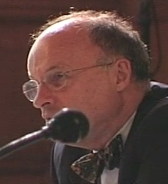
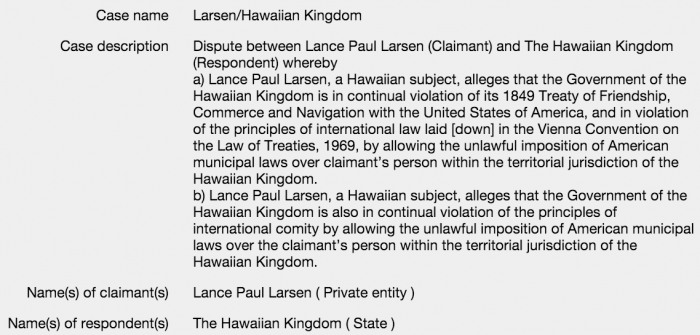
 Ms. Ninia Parks, counsel for Lance Larsen, selected
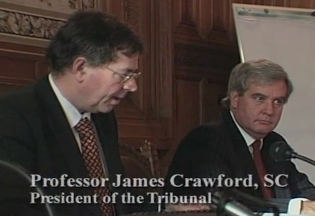
 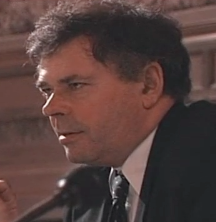 Once Mr. Agard was able to confirm the selections with the PCA, these two arbitrators would recommend a person to be the president of the tribunal. Both Greenwood and Griffith nominated Professor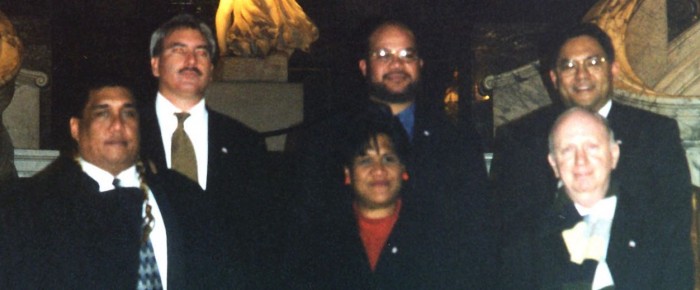
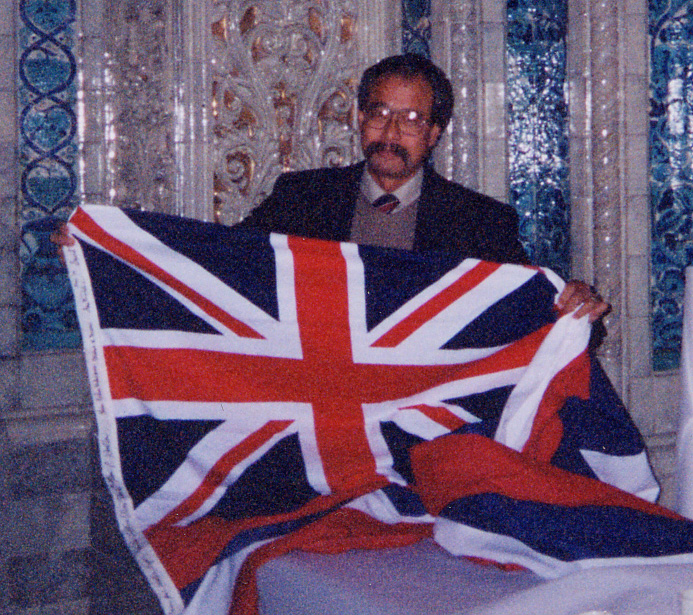


 As part of the International Bureau’s due diligence into the status of the Hawaiian Kingdom as an independent State under international law, the PCA’s Secretary General Van Den Hout made a formal recommendation to David Keanu Sai, Agent for the Hawaiian Government, to provide a formal invitation to the United States to join in the arbitration proceedings. This would have one of three outcomes—first, the United States would dispute the existence of the Hawaiian Kingdom as a State and the PCA would terminate the proceedings, second, it could join the arbitration in order to answer Larsen’s allegations of violating his rights that led to his incarceration, or, third, it could refuse to join in the arbitration, but allow it to go forward.
 In a conference call held in Washington, D.C., on March 3, 2000,
  between Mr. John Crook, United States Assistant Legal Adviser for United Nations Affairs, Ms. Parks and Mr. Sai, the United States was formally invited to join in the arbitration. It wasn’t until a couple of weeks later that the United States Embassy in The Hague notified the PCA that the United States will not join in the arbitration, but asked permission of the Hawaiian Government and Mr. Larsen’s attorney to have access to all pleadings, transcripts and records. The United States took the third option and did not deny the existence of the Hawaiian Kingdom as a State.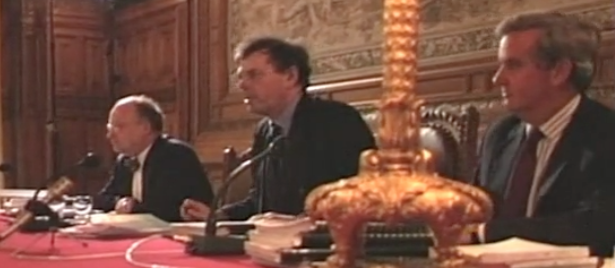
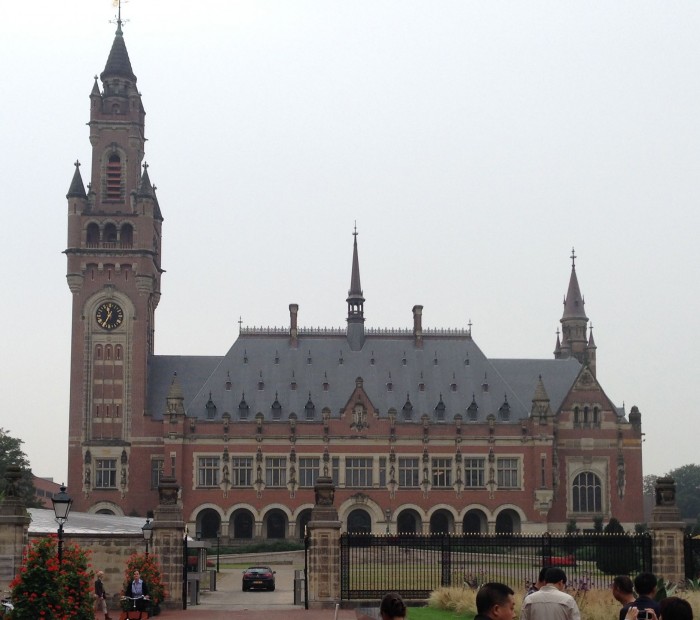
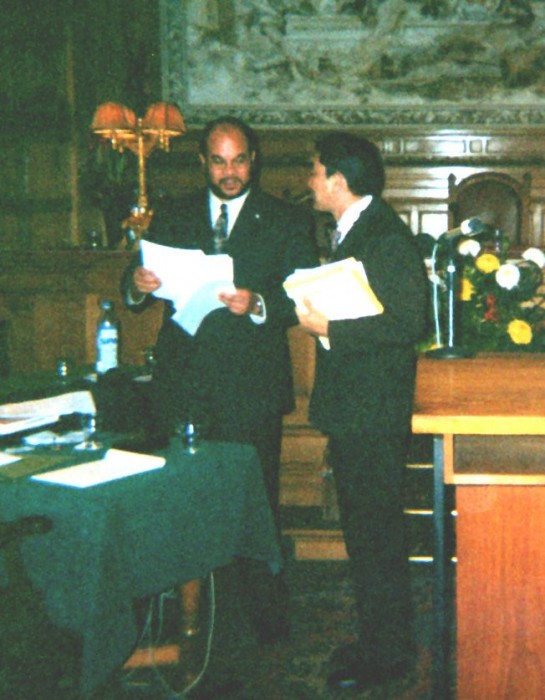 After written pleadings were submitted, oral hearings were held at The Hague on December 7, 8, and 11, 2000, and the Arbitration Award was filed with the PCA on February 5, 2001. The court concluded that the United States was a necessary third party and without their participation in the arbitration proceedings, Mr. Larsen’s allegations of negligence against the Hawaiian Government could not move forward.