United States Falsely Reports to United Nations Hawai‘i’s Status

When the United Nations was established in 1945 one of its goals was to address the colonial possessions of the allied countries who prevailed during World War II. Article 73(e) of the UN Charter required these countries to transmit information regarding their territorial possessions and the progress of these territories towards a full measure of self-government. The term “self” means for oneself and not imposed, and “government” means a system of governing or administration. These colonial possessions did not have a government of their own and came to be known as non-self-governing territories.

The process of achieving “self-government” is called “self-determination.” According to the United Nations Repertoire of the Practice of the Security Council, “Article 1(2) establishes that one of the main purposes of the United Nations, and thus the Security Council, is to develop friendly international relations based on respect for the ‘principle of equal rights and self-determination of peoples.’ The case studies in this section cover instances where the Security Council has discussed situations with a bearing on the principle of self-determination and the right of peoples to decide their own government, which may relate to the questions of independence, autonomy, referenda, elections, and the legitimacy of governments.”

According to UN General Assembly Resolution 1541 (XV), a non-self-governing territory “can be said to have reached a full measure of self-government by: (a) Emergence as a sovereign independent State; (b) Free association with an independent State; or (c) Integration with an independent State.” In other words, a non-self-governing territory was never a sovereign independent State, never in association with an independent State, or was never integrated with an independent State.

According to Dr. James Summers, Peoples and International Law (p. 210), “No conditions were set for self-government by independence, but conditions were attached to integration and free association. Free association…was to be established by the free and voluntary choice of the people concerned expressed by informed and democratic means. The individuality and culture of the territory had to be respected and its people had the right to determine their internal constitution without interference. This status, moreover, was not necessarily permanent and could later be changed by democratic means. Integration…was to take place on the basis of equality: people were to have equal status, citizenship, fundamental rights, representations and participation.”

In 1946, prior to the passage of the Hawai‘i Statehood Act by the United States Congress, the United States misrepresented its relationship with Hawai’i when its permanent representative to the United Nations identified Hawai’i as a non-self-governing territory under the administration of the United States since 1898. In accordance with Article 73(e) of the U.N. Charter, the United States permanent representative erroneously reported Hawai’i as a non-self-governing territory, which implied Hawai‘i was never a “sovereign independent State.”

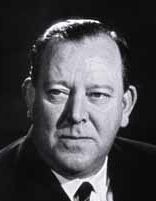
Secretary-General Trygve LieOn June 4, 1952, United Nations Secretary General Trygve Halvdan Lie reported information submitted to him by United States Ambassador to the United Nations, Warren Austin, regarding American Samoa, Hawai‘i, Puerto Rico and the Virgin Islands. In this report, the United States Ambassador made no mention that Hawai‘i was an independent State since 1843 and that its government was illegally overthrown by U.S. forces, which was later settled by an executive agreement through mediation and exchange of notes. The representative also failed to disclose diplomatic protests that succeeded in preventing the second attempt to annex the Islands by a treaty of cession in 1897. Instead, the representative provided a picture of Hawai‘i as if it were a non-self-governing territory. The report stated,

Austin_Warren_Robinson“The Hawaiian Islands were discovered by James Cook in 1778. At that time divided into several petty chieftainships, they were soon afterwards united into one kingdom. The Islands became an important port and recruiting point for the early fur and sandalwood traders in the North Pacific, and the principal field base for the extensive whaling trade. When whaling declined after 1860, sugar became the foundation of the economy, and was stimulated by a reciprocity treaty with the United States (1896).

American missionaries went to Hawaii in 1820; they reduced the Hawaiian language to written form, established a school system, and gained great influence among the ruling chiefs. In contact with foreigners and western culture, the aboriginal population steadily declined. To replace this loss and to furnish labourers for the expanding sugar plantations, large-scale immigration was established.

When later Hawaiian monarchs showed a tendency to revert to absolutism, political discords and economic stresses produced a revolutionary movement headed by men of foreign birth and ancestry. The Native monarch was overthrown in 1893, and a republic government established. Annexation to the United States was one aim of the revolutionists. After a delay of five years, annexation was accomplished.

…The Hawaiian Islands, by virtue of the Joint Resolution of Annexation and the Hawaiian Organic Act, became an integral part of the United States and were given a territorial form of government which, in the United States political system, precedes statehood.”

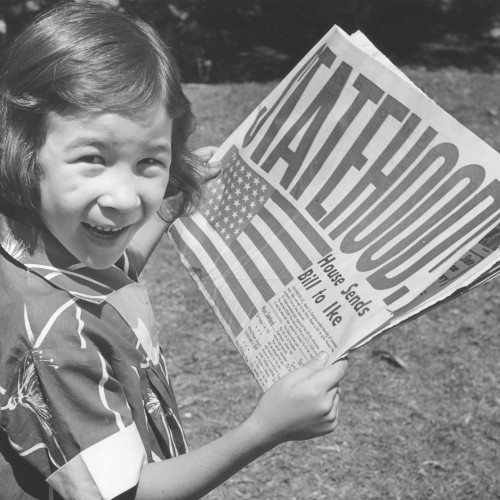
Statehood PhotoIn 1959, the Secretary General received a communication from the United States permanent representative that they will no longer transmit information regarding Hawai‘i because it was supposedly “integrated” into the United States under a new constitution that would take effect on August 21, 1959. This resulted in a General Assembly resolution stating it “Considers it appropriate that the transmission of information in respect of Alaska and Hawaii under Article 73e of the Charter should cease.”Evidence that the United Nations was not aware of Hawaiian independence since 1843 can be shown from the following statement by the United Nations’ Repertory of Practice of United Nations Organs, Extracts relating to Article 73 of the Charter of the United Nations, Supplement No. 1 (1955-1959), volume 3, at200, para. 101.

“Though the General Assembly considered that the manner in which Territories could become fully self-governing was primarily through the attainment of independence, it was observed in the Fourth Committee that the General Assembly had recognized in resolution 748 (VIII) that self-government could also be achieved by association with another State or group of States if the association was freely chosen and was on a basis of absolute equality. There was unanimous agreement that Alaska and Hawaii had attained a full measure of self-government and equal to that enjoyed by all other self-governing constituent states of the United States. Moreover, the people of Alaska and Hawaii had fully exercised their right to choose their own form of government.”

Although the United Nations passed two resolutions acknowledging Hawai‘i to be a non-self-governing territory that has been under the administration of the United States of America since 1898 and was granted “so-called” a full measure of self-governance in 1959, it did not affect the continuity of the Hawaiian State because, foremost, United Nations resolutions are not binding on member States of the United Nations, let alone a non-member State—the Hawaiian Kingdom. Professor Crawford explains, The Creation of States in International Law (p. 113), “Of course, the General Assembly is not a legislature. Mostly its resolutions are only recommendations, and it has no capacity to impose new legal obligations on States.” Secondly, the information provided to the General Assembly by the United States was distorted and flawed.  In East Timor, Portugal argued that resolutions of both the General Assembly and the Security Council acknowledged the status of East Timor as a non-self-governing territory and Portugal as the administering power and should be treated as “givens.” The International Court of Justice, however, did not agree and in its judgment (p. 103) found “that it cannot be inferred from the sole fact that the above-mentioned resolutions of the General Assembly and the Security Council refer to Portugal as the administrating Power of East Timor that they intended to establish an obligation on third States.”

Even more problematic is when the decisions embodied in the resolutions as “givens” are wrong. Acknowledging this possibility, Professor Bowett, The Impact of Security Council Decisions on Dispute Settlement Procedures (p. 97), states, “where a decision affects a State’s legal rights or responsibilities, and can be shown to be unsupported by the facts, or based upon a quite erroneous view of the facts, or a clear error of law, the decision ought in principle to be set aside.” Marco Öberg, The Legal Effects of Resolutions of the UN Security Council and General Assembly in the Jurisprudence of the ICJ (p. 892), also agrees and acknowledges that resolutions “may have been made on the basis of partial information, where not all interested parties were heard, and/or too urgently for the facts to be objectively established.” As an example, Öberg cited Security Council Resolution 1530, March 11, 2004, that “misidentified the perpetrator of the bomb attacks carried out in Madrid, Spain, on the same day.”

There exists a common misunderstanding that stems from Americanizationwhich promoted the lie that Hawai‘i was a colony of the United States, that Hawai‘i did not fully exercise “self-determination” in 1959 because there was no option for the people to choose to become a “sovereign independent State.” This has resulted in a paradoxical fringe movement of “re-inscription” onto to the Article 73(e) list of non-self-governing territories. The inherent contradiction of this argument is that in order to “re-inscribe” is to start from the premise that Hawai‘i was never a “sovereign independent State” in order to choose through a process of self-determination for Hawai‘i to be an “independent sovereign State.”

The underlying paradox to this argument is that to re-inscribe is to place the United States in a position of power as the administrator over a territory that is not a sovereign independent State, in order to negotiate with the United States to become a sovereign independent State. This is a contradiction, especially after the Permanent Court of Arbitration stated in its 2001 Larsen v. Hawaiian Kingdom Arbitral Award that Hawai‘i “existed as an independent State recognized as such by the United States of America, the United Kingdom and various other States, including by exchanges of diplomatic or consular representatives and the conclusion of treaties.”

There is no evidence in the history of international law where an already established sovereign independent State was ever considered a non-self-governing territory, because international law provides for the rule preserving the continuity of the Hawaiian Kingdom as a sovereign independent State even during an illegal and prolonged occupation.

A History of the Future: Keanu Sai and the Occupation of Hawai‘i

In 2012, brothers Gorav Kalyan and Professor Rohan Kalyan, Ph.D., of Nonetheless Productions produced an award winning short film on the United States illegal overthrow of the government of the Hawaiian Kingdom in 1893 and the subsequent U.S. illegal and prolonged occupation since the 1898 Spanish-American War. Filmed entirely on the campus of the University of Hawai‘i at Manoa, the film interviews academics on their research of the Hawaiian Kingdom.

https://vimeo.com/88787901

rohan-kalyanNonetheless Productions has authorized the posting of the film. Dr. Kaylan is an Assistant Professor in International and Global Studies at Sewanee: University of the South in Tennessee. Nonetheless Productions is currently working on expanding the short film into a full documentary. For more information on their project contact Dr. Kaylan at rohan.kalyan@gmail.com.

“Hawaiian Nationality” Dissertation Defense – Willy Kauai, Ph.D. candidate

***UPDATE. Willy Kauai successfully defended his dissertation. He will be graduating in May 2014 with a Ph.D. in political science. His committee members were comprised of Professor Neal Milner, Chair, Professor Debora Halbert, Professor Charles Lawrence III, Dr. Keanu Sai, Professor Melody Kapilialoha MacKenzie, and Professor Puakea Nogelmeier.

Kauai_Defense

Hawai‘i and the Namibia Exception

According to international law, the United States Federal government and the United States’ State of Hawai‘i government operating within the territory of the Hawaiian Kingdom are illegal regimes. Article 43 of the Hague Convention, IV, mandates that the occupying State, the United States, to administer the laws of the occupied State, the Hawaiian Kingdom. According to Professor Marco Sassoli, Article 43 of the Hague Regulations and Peace Operations in the Twenty-first Century, p. 5, “Article 43 does not confer on the occupying power any sovereignty over the occupied territory. The occupant may therefore not extend its own legislation over the occupied territory nor act as a sovereign legislator. It must, as a matter of principle, respect the laws in force in the occupied territory at the beginning of the occupation.”

These illegal regimes are and have been administering United States law and not Hawaiian law in an attempt to conceal the prolonged and illegal occupation of the Hawaiian Kingdom. According to Dr. Yaël Ronen, Status of Settlers Implanted by Illegal Regimes under International Law (2008), p. 2, “Illegal regimes often transfer of their own populations or populations loyal to them in the territory, and subsequently grant these populations residence or nationality in the territory. This is done in order to change the demographic composition of the territory under dispute and thereby solidify the regime.”

When another country’s government is operating within the territory of another country without title or sovereignty, every official action taken by that regime is illegal and void except for its registration of births, marriages and deaths. This is called the “Namibia exception,” which is a decision by the International Court of Justice (ICJ) in 1971 called the Legal Consequences for States of the Continued Presence of South Africa in Namibia (South West Africa) notwithstanding Security Council Resolution 276 (1970).

In 1966, the United Nations General Assembly passed resolution 2145 (XXI) that terminated South Africa’s administration of Namibia, formerly known as South West Africa, a former German colony. This resulted in Namibia coming under the administration of the United Nations, but South Africa refused to withdraw from Namibian territory and consequently the situation transformed into an illegal occupation. As a former German colony, Namibia became a mandate territory under the administration of South Africa after the close of the First World War.

Addressing the legal consequences arising for South Africa’s refusal to leave Namibia, the ICJ stated that by “occupying the Territory without title, South Africa incurs international responsibilities arising from a continuing violation of an international obligation,” and that all countries, whether a member of the United Nations or not were “under an obligation to recognize the illegality and invalidity of South Africa’s continued presence in Namibia and to refrain from lending any support or any form of assistance to South Africa with reference to its occupation of Namibia.” The ICJ, however, clarified that “non-recognition should not result in depriving the people of Namibia of any advantages derived from international cooperation.

The conduct of an illegal regime during occupation is limited and confined to the international laws of occupation and to the principle of ex injuria ius non oritur—where unlawful acts cannot be the source of lawful rights. According to Ronen, p. 39, “Opposite the principle of ex injuria jus non oritur operates the principle ex factis ius oritur. It mandates that acts of the illegal regime may have legal consequences despite the illegality and status of the regime that performed them.” Ronen explains, “In other words, the general invalidity of domestic acts carried out under an illegal regime is qualified where such invalidity would act to the detriment of the inhabitants of the territory. This is the Namibia exception.” The ICJ in the Namibia case explained, “the principle ex injuria jus non oritur dictates that acts which are contrary to international law cannot become a source of legal acts for the wrongdoer… To grant recognition to illegal acts or situation will tend to perpetuate it and be benefitial to the state which has acted illegally.”

The focus of the Namibia exception is to protect the interests of the nationals of the occupied State and not to entrench the authority of an illegal regime. The validity of any other official acts of an illegal regime other than the registration of births, marriages and deaths must not serve “to the detriment of the inhabitants of the territory” being occupied and must not be seen to further “entrench the authority of an illegal regime.”

The Hawaiian Kingdom at the Permanent Court of Arbitration (1999-2001)

https://vimeo.com/17007826

On November 8, 1999, international arbitration proceedings were initiated at the Permanent Court of Arbitration (PCA), The Hague, Netherlands, between Lance Paul Larsen and the acting Government of the Hawaiian Kingdom (Larsen v. Hawaiian Kingdom). The arbitration agreement provided, “The Arbitral Tribunal is asked to determine, on the basis of the Hague Conventions IV and V of 18 October 1907, and the rules and principles of international law, whether the rights of the Claimant under international law as a Hawaiian subject are being violated, and if so, does he have any redress against the Respondent Government of the Hawaiian Kingdom?”

Larsen was arrested on October 4, 1999, in Hilo, Hawai‘i, and imprisoned for 30 days, seven of which were in solitary confinement, for following Hawaiian Kingdom law. Larsen, as the Claimant, alleged that the acting government, the Respondent, was Ninia_Parkslegally liable to him for allowing the unlawful imposition of American municipal laws over him within the territorial jurisdiction of the Hawaiian Kingdom. In the pleading, Larsen’s attorney, Ms. Ninia Parks, esq., based her case on the following grounds:

    1. Mr. Larsen is a Hawaiian subject, with a Hawaiian nationality.
    2. As a Hawaiian subject, Mr. Larsen is bound by Hawaiian Kingdom law. He is not bound by the laws of the State of Hawaii nor by the laws of the United States of America.
    3. Mr. Larsen’s rights as a Hawaiian subject have been systematically and continuously denied by the United States of America, the occupying force in the prolonged occupation of the Hawaiian islands by the United States of America. At a minimum, the United States of America has continually denied Mr. Larsen’s nationality as a Hawaiian subject, has illegally imposed American laws over his person, has extorted monetary fines from Mr. Larsen under threat of imprisonment, and has imprisoned Mr. Larsen for asserting his lawful rights as a Hawaiian national.
    4. The government of the Hawaiian Kingdom has a duty to protect the rights of Mr. Larsen, a Hawaiian subject, despite the continued occupation of the Hawaiian Islands by the United States of America.
    5. The government of the Hawaiian Kingdom, through its acting Regency, has not fulfilled this duty.

PCA_SaiIn its pleading, the acting Government, represented by Dr. Keanu Sai as lead agent, denied the allegations and submitted “that the Claimant’s rights under international law are being violated, but to what extent, is left to the Arbitral Tribunal to decide. That this decision must be made within fixed and established principles and laws pertaining to the matter, and that the Hawaiian Kingdom Government is not liable for redress of these violations under its present conditions as an occupied State.”

In the American Journal of International Law, vol. 95, p. 928 (2001), and reprinted in the Hawaiian Journal of Law and Politics, vol. 1, p. 83 (2004), Bederman and Hilbert, state that at “the center of the PCA proceeding was…that the Hawaiian Kingdom continues to exist and that the Hawaiian Council of Regency (representing the Hawaiian Kingdom) is legally responsible under international law for the protection of Hawaiian subjects, including the claimant. In other words, the Hawaiian Kingdom was legally obligated to protect Larsen from the United States’ ‘unlawful imposition [over him] of [its] municipal laws’ through its political subdivision, the State of Hawai‘i. As a result of this responsibility, Larsen submitted, the Hawaiian Council of Regency should be liable for any international law violations that the United States committed against him.”

Tjaco_van_den_HoutIn February 2000, the PCA’s Secretary General Tjaco T. van den Hout recommended that the acting Government provide a formal invitation to the United States to join in the arbitration. In order to carry out this request by the Secretary General, Dr. Sai was sent to Washington, D.C. Ms. Ninia Parks, attorney for the Claimant Lance Larsen, accompanied Dr. Sai.

John_CrookOn March 3, 2000, a telephone meeting with John R. Crook, Assistant Legal Adviser for United Nations Affairs section of the US Department of State, was held. It was stated to Mr. Crook that the “visit was to provide these documents to the Legal Department of the U.S. Department of State in order for the U.S. Government to be apprised of the arbitral proceedings already in train and that the Hawaiian Kingdom, by consent of the Claimant, extends an opportunity for the United States to join in the arbitration as a party.”

Mr. Crook was made fully aware of the United States occupation of the Hawaiian Kingdom and the establishment of the acting Government. This direct challenge to US sovereignty over the Hawaiian Islands should have prompted the United States to protest the action taken by the Permanent Court of Arbitration in accepting the Hawaiian arbitration case and call upon the Secretary General to cease and desist because this action constitutes a violation of US sovereignty. The United States did Phyllis_Hamiltonneither. Instead, Deputy Secretary General Phyllis Hamilton notified the acting Government that the United States notified the Court that it will not join in the arbitration, but did request from the acting government permission to access all pleadings and transcripts of the case. Both the acting government and Larsen’s attorney consented. By this action, the United States directly acknowledged the circumstances of the proceedings and the acting government’s representation of the Hawaiian Kingdom before an international tribunal.

James_CrawfordThree distinguished jurists presided on the Arbitration Tribunal. Professor James Crawford, SC, served as Presiding arbitrator. Professor Crawford is a professor of international law at the University of Cambridge. At the time of the arbitration, Crawford was also a member of the United Nations International Law Commission (ILC) and was responsible for the ILC’s work on the International Criminal Court (1994) and the Articles on State Responsibility (2001).

Christopher_GreenwoodJudge Sir Christopher Greenwood, QC, served as Associate arbitrator. Greenwood was at the time professor of international law at the London School of Economics and Political Science and legal counsel to the United Nations on the Laws of War and Occupation. In 2008, the United Nations elected Greenwood to be judge on the International Court of Justice.

Gavan_GriffithDr. Gavan Griffith, QC, served as Associate Arbitrator. Griffith was former Solicitor General for Australia and also served as counsel and agent for Australia in Nauru v. Australia before the International Court of Justice.

Three days of oral hearings were set for December 7, 8 and 11, 2000 at the PCA. At the center of these proceedings was whether or not Larsen was able to maintain his suit against the acting Government for not protecting him without the participation of the United States who would need to answer to the alleged violations committed by them against Larsen. Larsen was attempting to hold the acting Government responsible for his injuries committed by the United States. In international law, this is a situation called the “necessary and indispensable party” rule and it was the basis of decisions made by the International Court of Justice in Monetary Gold case (Italy v. France, United Kingdom of Great Britain and Northern Ireland and United States of America), the Nauru case (Nauru v. Australia), and the East Timor case (Portugal v. Australia).

In the 2001 Arbitral Award, the Tribunal explained, that it “cannot determine whether the Respondent [the acting government] has failed to discharge its obligations towards the Claimant [Larsen] without ruling on the legality of the acts of the United States of America. Yet that is precisely what the Monetary Gold principle precludes the Tribunal from doing. As the International Court explained in the East Timor case, ‘the Court could not rule on the lawfulness of the conduct of a State when its judgment would imply an evaluation of the lawfulness of the conduct of another State which is not a party to the case.’”

The Tribunal, however, did acknowledge the Hawaiian Kingdom to be an independent State. In its decision, the Tribunal concluded in the Award, “that in the nineteenth century the Hawaiian Kingdom existed as an independent State recognized as such by the United States of America, the United Kingdom and various other States, including by exchanges of diplomatic or consular representatives and the conclusion of treaties.” International law provides for the continuity of the Hawaiian Kingdom since the nineteenth century to the present, which was the basis for the arbitration case in the first place.

‘Iolani School Students Reenact Historical Trial at ‘Iolani Palace

Lorrin_ThurstonOn March 6, 2014, KITV News aired a story where ‘Iolani School students reenacted a historical trial of Lorrin Thurston, who was the lead insurgent when the United States illegally overthrew the Hawaiian Kingdom government in 1893, was put on trial for treason. Thurston was a Hawaiian subject and an attorney in the Hawaiian Kingdom. He was the leader of the insurgency that got the U.S. Ambassador John Stevens to land U.S. troops to protect them from arrest by the Hawaiian authorities in order to declare themselves and new government. U.S. Special Commissioner James Blount who was appointed by President Grover Cleveland to investigate whether or not U.S. troops were involved, concluded, “in pursuance of a prearranged plan, the Government thus established hastened off commissioners to Washington to make a treaty for the purpose of annexing the Hawaiian Islands to the United States.”

To view the KITV news coverage of the historical trial go to this link.

‘Iolani School is a private school that was established in 1863 by Father William R. Scott of the Anglican faith. The former name of the school was Lua‘ehu, but it was renamed ‘Iolani in 1870 by the former Queen Emma when it moved from the city of Lahaina to Honolulu. The school’s patron saints are King Kamehameha IV and Queen Emma.

Here is the transcript of KITV’s coverage.

HONOLULU —The ‘Iolani palace throne room, the very room where former Queen Lili’uokalani was put on trial for treason, was turned into a court room Thursday.

At first glance you feel like you have been transported back in time to the trial of Lili’uokalani. The palace throne room was set up for the case, but well over a century later comes a twist; Iolani School history students are putting Lorrin Thurston on trial.

Thurston played a prominent role in the overthrow of the Hawaiian monarch; the witnesses historical figures of that time.

“How do you feel about Lorrin Thurston and his overthrow of Hawaii? I believe he’s guilty. He led the overthrow. He acted on his own accord. He started the Committee of Safety and he also wrongfully used the U.S. Navy as intimidation during the coup,” said Senator James Blount, author of the Blount Report. “You did not take the opinion of the coup? I didn’t have them for my report. I envied the local population. Why? Cause they would have been biased.”

Taking their assignment seriously most dressed the part and sounded the part too.

“The Angle Franco Treaty…I agreed to recognize the Hawaiian Kingdom as a sovereign,” said Queen Victoria, a friend of Queen Lili’uokalani.

“I didn’t betray her. I did what I thought would be best for the people,” said Sanford Dole, President of the Republic of Hawaii.

“Did the annexation of Hawaii benefit the landowner more or was it made for the people — the Native Hawaiians? It was for everyone living in Hawaii,” said Max Webber, an Iolani School 12th grader playing Thurston.

After a brief deliberation, the jury decides.

“Your honor, we the jury find Lorrin Thurston guilty of the illegal overthrow of the Hawaiian Kingdom,” said a student cast in the jury.

A sigh came from Weber, who played Thurston and dove right into the project.

“I read there all these books about him and he had a book he wrote about himself. So, I went through and read a lot of that and I also ideas of what he was thinking during that time,” said Weber.

“‘Iolani Palace is taking a new initiative to focus more on education and going outside of the four walls of the classrooms is so much more effective,” said ‘Iolani Palace Executive Director Kippen de alba Chu

Iolani School history teacher Melanie Pfingstem, who played the judge, agrees.

“Well I just think that simulations are really a great way for kids to internalize history,” said Pfingstem.

“This whole experience has really given us the details and the exact circumstances around the overthrow and the part each player played. That was really eye opening to how Hawaii became what it is today,” Michelle Kimura, an Iolani School 10th grader who portrayed Lili’uokalani.