

Today, the attorney for the Amici Curiae filed a Supplemental Brief in Support of its Motion for Reconsideration of the Court’s Order denying Amici Curiae’s Brief in Support of the Kamehameha Schools.
The Supplemental Brief brings in new evidence not seen by the Court regarding the Larsen v. Hawaiian Kingdom case, which was at the center of oral arguments, in Nicaragua v. Germany, at the International Court of Justice (ICJ) from September 7-10, 2026.
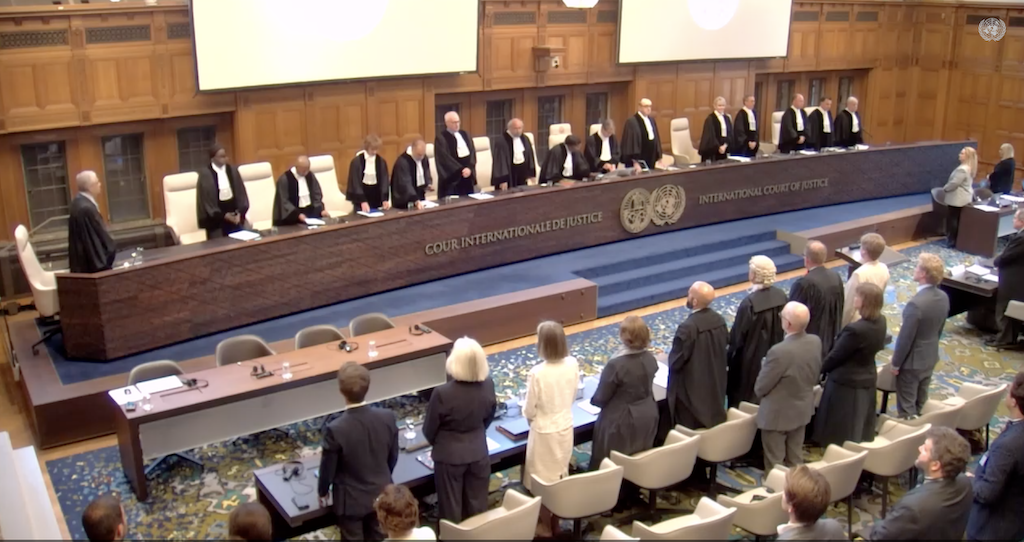
On March 1, 2024, Nicaragua filed an Application instituting proceedings against Germany for alleged violations by Germany of its obligations under the Convention on the Prevention and Punishment of the Crime of Genocide and the Geneva Conventions of 1949 and their Additional Protocols, as well as “intransgressible principles of international humanitarian law and other peremptory norms of general international law” in relation to the Occupied Palestinian Territory, in particular the Gaza Strip.
In its Application, Nicaragua states that “[e]ach and every Contracting Party to the Genocide Convention has a duty under the Convention to do everything possible to prevent the commission of genocide” and that since October 2023, there has been “a recognised risk of genocide against the Palestinian people, directed first of all against the population of the Gaza Strip.”
Nicaragua further argues that by providing political, financial and military support to Israel and by defunding the United Nations Relief and Works Agency for Palestine Refugees in the Near East, “Germany is facilitating the commission of genocide and, in any case has failed in its obligation to do everything possible to prevent the commission of genocide.”
The Application was accompanied by a request for the indication of provisional measures, in which Nicaragua asks the Court to indicate such measures as a matter of extreme urgency, pending the Court’s determination on the merits of the case, with respect to the “participation [of Germany] in the ongoing plausible genocide and serious breaches of international humanitarian law and other peremptory norms of general international law occurring in the Gaza Strip.”
Germany was seeking to have the ICJ dismiss Nicaragua’s case on jurisdictional grounds. Germany stated that because Israel is not a party to the case the ICJ does not have jurisdiction because Israel is a necessary third party based on the Monetary Gold principle that came before the ICJ in 1954. The Monetary Gold principle is a rule in international law that international courts cannot settle a dispute if doing so requires ruling on the legal interests of an absent third-party State that has not consented to the court’s jurisdiction.
The ICJ scheduled the first round of oral arguments for Germany on September 7, 2026, followed by Nicaragua on September 8. Second round of oral arguments was scheduled for Germany on September 9, followed by Nicaragua on September 10.
During the first round on September 8th, Nicaragua drew the Court’s attention to the arbitration award in Larsen v. Hawaiian Kingdom that was held at the Permanent Court of Arbitration from 1999-2001. Nicaragua was arguing that the Larsen award stated there is an exception to the Monetary Gold principle. According to the transcript Nicaragua stated:
But it is necessary to go further, Ladies and Gentlemen, you who are the judges of the court: In our court case it is no longer a question of the risks of genocide or of risks of grave violations of international humanitarian law or the right of humanity, including the right of the Palestinian people to decide by themselves. It is clear and already established that these risks have become concrete and that the responsibility of Israel is involved by reason of grave and persistent violations of numerous imperative norms of international law. This is in fact established, a “given.” Furthermore when even the principle of Monetary Gold, as Germany interpreted it, would be a stake in the current dispute (quod non [“which it is not”]), it cannot get into the way of you exercising your authority. The Court of Arbitration, which made a pronouncement in the case of Larsen v. Hawaiian Kingdom, presided by James Crawford, recalled very clearly within a different context: The principle of Monetary Gold does not apply as long as “the legal finding against an absent third party could be taken as a “given.”
In the second round on September 9th, Germany responded to Nicaragua’s argument that the Larsen case is an exception to the Monetary Gold principle. According to the transcript, Germany stated:
Ultimately, Nicaragua has not sought to challenge Germany’s point that Nicaragua’s Application and Memorial “are replete with assertions that Israel is in breach of multiple and fundamental norms of international law”, and instead Nicaragua seeks to turn this into a positive, its more strongly argued answer to Monetary Gold, which is the argument that Israel’s breaches can be taken as a “given”. The juridical underpinning of this argument is the decision of the Tribunal ⎯ and certainly a very distinguished Tribunal ⎯ in Larsen v. Hawaiian Kingdom. The dispute concerned alleged breach by Hawaii of its Treaty of Amity with the USA through the alleged unlawful imposition of US municipal law in Hawaii. Following its consideration of the Monetary Gold line of cases, with East Timor and Nauru being regarded as “particularly pertinent”, the Tribunal stated:
“11.23. . . . The Tribunal cannot rule on the lawfulness of the conduct of the respondent in the present case if the decision would entail or require, as a necessary foundation for the decision between the parties, an evaluation of the lawfulness of the conduct of the United States of America, or, indeed, the conduct of any other State which is not a party to the proceedings before the Tribunal. [You can see that is obviously borrowing the formulation from the East Timor case, picked up of course by this Court in Guyana v. Venezuela, and in many other cases.]
11.24. The Tribunal notes, for the sake of completeness, that there may well be exceptions to the Monetary Gold principle. For example, if the legal finding against an absent third party could be taken as given (for example, by reason of an authoritative decision of the Security Council on the point), the principle may well not apply. It is also possible that the principle does not apply where the finding involving an absent third party is merely a finding of fact, not entailing or requiring any legal assessment or qualification of that party’s conduct or legal position. [That is not our case, I note in passing, and Nicaragua has not suggested otherwise. The Tribunal continued:] In the present case, however, the parties did not seek to rely on any possible exception . . . ”
So, of course, the Tribunal did not dig any deeper into this possibility.
On September 10th, Nicaragua responded to Germany’s position regarding the Larsen case. According to the transcript, which is in French, but here is the translation into English, Nicaragua stated:
My contradictor is also coming back at me, in a rather longwinded way, concerning the subject of the argument by Nicaragua according to which, in order once more to take up the formulation of the passage pertinent to the ruling made in the case of Larsen v. Hawaiian Kingdom—to which he is in deep disagreement. For example, if the legal finding against an absent third party could be taken as given (for example, by reason of an authoritative decision of the Security Council on the point), the principle may well not apply.
Nicaragua pointed out that the Security Council did determine a legal finding that Israel is a belligerent State, a “given,” when it invaded Gaza in its Resolution 2803 (2025), Resolution 2735 (2024), and Resolution 2728 (2024), that determined Israel to be a belligerent State. In its oral argument, Nicaragua also provided a powerpoint slide showing the relevant two articles of the Larsen award.
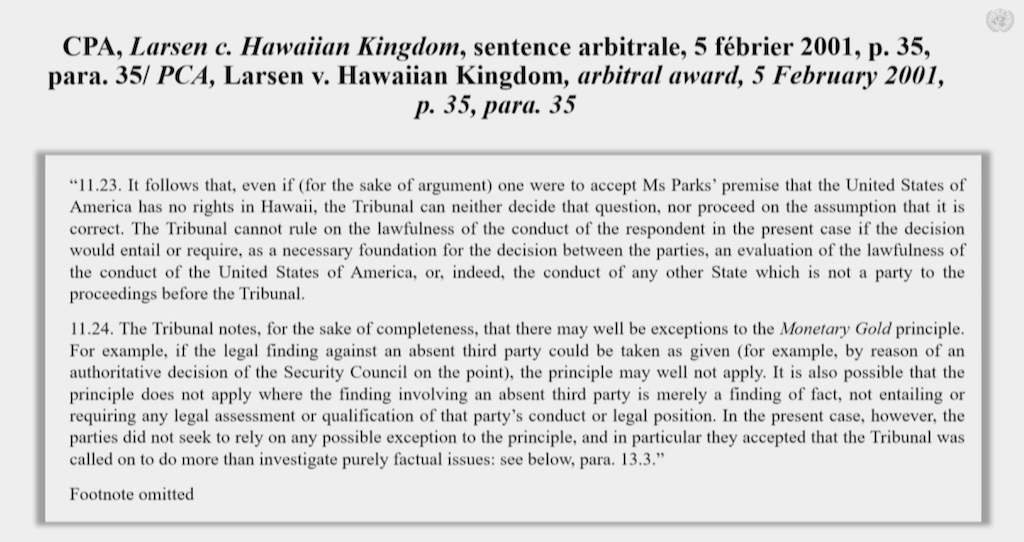
The significance of these proceedings cannot be underestimated. First, the Larsen case is now being used as a precedent case where there are exceptions to the Monetary Gold principle. Second, it is drawing international attention to the American occupation of the Hawaiian Kingdom and the illegal imposition of American laws on a world’s stage the International Court of Justice.
It should be noted that when Germany, in its statement, stated to the ICJ that in Larsen v. Hawaiian Kingdom “The dispute concerned alleged breach by Hawaii of its Treaty of Amity with the USA through the alleged unlawful imposition of US municipal law in Hawaii,” it was stating an fact that American laws being imposed in the Hawaiian Kingdom is unlawful. Germany’s statement is from the case description at the Permanent Court of Arbitration’s website states:
Lance Paul Larsen, a resident of Hawaii, brought a claim against the Hawaiian Kingdom by its Council of Regency (“Hawaiian Kingdom”) on the grounds that the Government of the Hawaiian Kingdom is in continual violation of: (a) its 1849 Treaty of Friendship, Commerce and Navigation with the United States of America, as well as the principles of international law laid down in the Vienna Convention on the Law of Treaties, 1969 and (b) the principles of international comity, for allowing the unlawful imposition of American municipal laws over the claimant’s person within the territorial jurisdiction of the Hawaiian Kingdom.
Both Nicaragua and Germany are Contracting States of the Permanent Court of Arbitration that recognized the continued existence of the Hawaiian Kingdom as a State since the nineteenth century and the Council of Regency as its government. This fact was specifically noted in the Amici Curiae’s Motion for Leave to File Amici Curiae’s Brief.
Another particular importance is that William Schabas, Professor of International Law at Middlesex University, and Professor Emeritus of International Criminal Law and Human Rights, at Leiden University, is a member of Nicaragua’s legal team as Counsel.
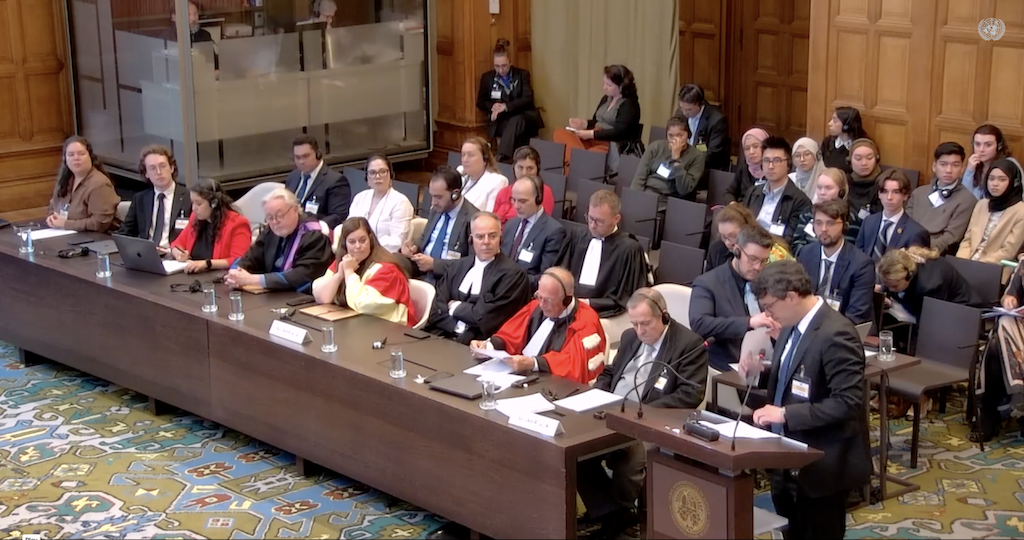
In 2019, at the request of Dr. Keanu Sai, as Head of the Royal Commission of Inquiry, Professor Schabas wrote a Legal Opinion on War Crimes Related to the United States Occupation of the Hawaiian Kingdom since 17 January 1893. One of the war crimes he mentioned was the unlawful imposition of American laws within the territory of the Hawaiian Kingdom, which is the war crime of usurpation of sovereignty during occupation. Professor Schabas is cited in the Amici Brief.
Aloha Aina
Yeah! The Kingdom’s story is being spoken again in The Hague!
While citing Larsen doesn’t decide Hawaii’s status, it does places the Kingdom’s history before the world again & AWARENESS is the first step toward JUSTICE. Seeing Larsen v. Hawaiian Kingdom cited on the world stage reminds us that history is NOT closed!
May this growing international attention turn remembrance into responsibility! IMUA!
Wonderful to see the Larsen case is being referred to in these proceedings and recognized as setting a precedent. Possibly also the first time many people there are learning of the illegal occupation of the Hawaiian Kingdom.