
International law is the set of rules, norms, and standards that govern relations between sovereign and independent States, and international organizations. An example of an international organization is the Permanent Court of Arbitration, which is an intergovernmental organization comprised of government representatives of independent States.
The main sources of international law are international agreements called convention or treaties, international custom, and general principles of law recognized by civilized nations. International custom is also called customary international law, which is a set of unwritten, binding legal rules derived from the consistent, general practices of independent States, rather than formal written treaties.
There are two components of customary international law—the “what,” which is the specific practice of States, and the “why,” which is the reason a State does the specific practice. The former is called State practice, and the latter is called opinio juris where the States must act out of a sense of legal obligation and not just because it wants to. Opinio juris is Latin that means “opinion of law or practice.” The action of a State can include its silence, which is an act of acquiescence.
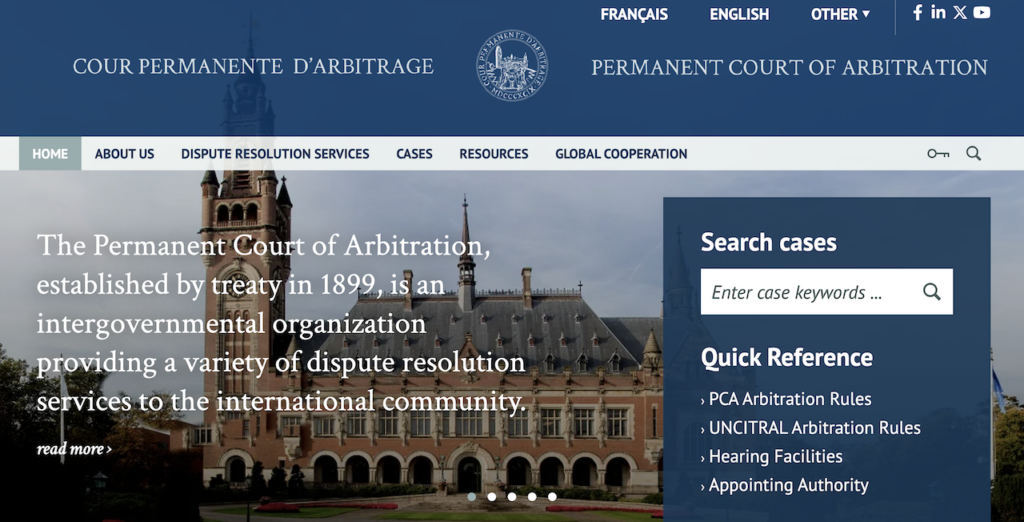
When the Permanent Court recognized the Hawaiian Kingdom’s continued existence as an independent State and the Council of Regency as its interim government, in Larsen v. Hawaiian Kingdom, it was an act taken by an intergovernmental organization. Professor Michael Akehurst, in his article “Custom as a Source of International Law,” stated that because intergovernmental organizations are comprised of representatives of States, “their practice is best regarded as the practice of States.” So, when none of the current 127 States that comprise the Permanent Court, which includes the United States, objected to the Permanent Court’s act of recognizing the Hawaiian Kingdom, they did so because of a legal obligation.
That legal obligation is that international law clearly states that the State continues to exist despite its government being militarily overthrown. This is why the State of Iraq continued to exist despite the United States military overthrow of the Iraqi government during the Second Gulf War. This was called the American occupation of Iraq. And that the only way the United States could acquire the territory and sovereignty of the Hawaiian Kingdom is by a treaty of cession. There is no such treaty that the Hawaiian Kingdom ceded its territory and sovereignty to the United States. There only exists the unlawful imposition of American laws over the territory of the Hawaiian Kingdom since 1898. Like any of the laws of a State, American laws have no effect outside of its territorial borders.
There are two significant acts by the Permanent Court that the United States did not object to. The first significant act are the Permanent Court’s annual reports from 2001-2011 that stated the jurisdiction of the Permanent Court for the Larsen v. Hawaiian Kingdom arbitration was by virtue of Article 47 of the 1907 Hague Convention for the Pacific Settlement of International Disputes, which established the Permanent Court. Article 47 states, “The jurisdiction of the Permanent Court may, within the conditions laid down in the regulations, be extended to disputes [with] non-Contracting Powers.” Under international law “Powers” and “States” are used interchangeably.
Because the Hawaiian Kingdom did not sign the 1907 Hague Convention, it is considered a non-Contracting Power. There are currently 125 Contracting Powers to the 1907 Hague Convention who are also Contracting States to the United Nations Charter. Of the 193 Member States of the United Nations, 68 are non-Contracting Powers to the 1907 Hague Convention like the Hawaiian Kingdom. Just as the Hawaiian Kingdom could access the jurisdiction of the Permanent Court to resolve an international dispute, so could these 68 States under Article 47.
The second significant act is the Permanent Court’s case description of the Larsen case on its website, which states:
Lance Paul Larsen, a resident of Hawaii, brought a claim against the Hawaiian Kingdom by its Council of Regency (“Hawaiian Kingdom”) on the grounds that the Government of the Hawaiian Kingdom is in continual violation of: (a) its 1849 Treaty of Friendship, Commerce and Navigation with the United States of America, as well as the principles of international law laid down in the Vienna Convention on the Law of Treaties, 1969 and (b) the principles of international comity, for allowing the unlawful imposition of American municipal laws over the claimant’s person within the territorial jurisdiction of the Hawaiian Kingdom.
Because the United States has not objected to the Permanent Court’s description of the case, it accepts the description as true and accurate. The case description states that the Hawaiian Kingdom, a non-Contracting Power, is represented by the Council of Regency as its Government. The 1849 Treaty of Friendship, Commerce and Navigation between the Hawaiian Kingdom and the United States continues to exist. And that the imposition of American municipal laws within the territorial jurisdiction of the Hawaiian Kingdom is UNLAWFUL.
In the federal lawsuit of Students for Fair Admissions v. Kamehameha Schools, there is a collision of Hawaiian Kingdom laws and American laws. The plaintiff is relying on American laws in its lawsuit, the defendant exists under Hawaiian Kingdom laws, and the federal court is under American law, which the United States, under customary international law, recognizes as UNLAWFUL.
These were the grounds for the Hawaiian Kingdom to intervene by filing a motion on January 21, 2026, in the case to ensure the protection of Kamehameha Schools under Hawaiian Kingdom law as well as customary international law that binds the United States. When Judge Micah Smith denied the Hawaiian Kingdom’s motion to intervene on January 23, 2026, claiming that it gave rise to the political question doctrine, the Hawaiian Kingdom filed a motion for reconsideration on February 3, 2026, because Judge Smith committed a “manifest error” in his judgment.
In its motion for reconsideration, the Hawaiian Kingdom showed why the Judge was in error because the political question only arises if the United States does not currently recognize the Hawaiian Kingdom and the Council of Regency as its government, BUT IT DID.
In the motion, it explained that not only did the United States recognize the Hawaiian Kingdom and the Council of Regency by opinio juris—customary international law as already explained, but also by an executive agreement, being a treaty under international law, where the United States requested permission from the Hawaiian Kingdom, WHICH IT GAVE, to have access to all records and pleadings of the Larsen case. The Deputy Secretary General of the Permanent Court, Phyllis Hamilton, brokered the agreement.
Coincident to the granting of permission was the United States recognition of the Hawaiian Kingdom and the Council of Regency as its interim government. In laymen’s terms, you can’t request permission without first recognizing that you are asking permission from a government that is a defendant in an international arbitration case at the Permanent Court.
It would appear that Judge Smith hit the “pause button.” Where he quickly issued the judgment denying the Hawaiian Kingdom’s motion to intervene just two days after the filing, we are now at seventeen days since the filing of the motion for reconsideration.
It’s nice to see the truth is so close to the surface
So who now holds Judge Smith accountable? What is the entity that informs Judge Smith that his action is illegal? What is the process of accountability?
Things that make you go Hmmm. The Judge was so fast to dismiss with the political question doctrine and now confronted with evidence of U.S. recognition of the HK and its gov. he is dragging his feet. He fell for the trap and got everyone including himself handcuffed. Looking for a hole to jump through but none exists. He should hope the Plaintiff or Respondent provide a lifeboat they can jump into by them motioning for the U.S. Attorney General to provide irrefutable evidence that rebuts the HK’s evidence. It’s impossible but that way if the U.S. AG fails to provide the evidence; he can dismiss the case and blame it all on the AG. If he moves this case on his own in violation of the rules, it’s all null and void and appealable. Not to mention a war crime. I get the feeling no matter what the Judge does, it’s setting things up for something else down the line. MHO
🔥
My bad, I was wrong in my previous post suggesting that the Plaintiff and Respondent could motion for the U.S. Ag to provide evidence. After examining Belmont, Garamendi and Pink again, it is clear that the Judge, Plaintiff and Respondent can’t move. Actually, no one can. I guess the best thing for the Judge is to leave this case hanging in limbo.
Kumu Sai
Mahalo nui loa! E’A Big Island love Kumu!! Looks and sounds like…….
CHECK MATE🤙🏽 Cheeeee hooooo 💪🏽 the Hawaiian Kingdom never left!